
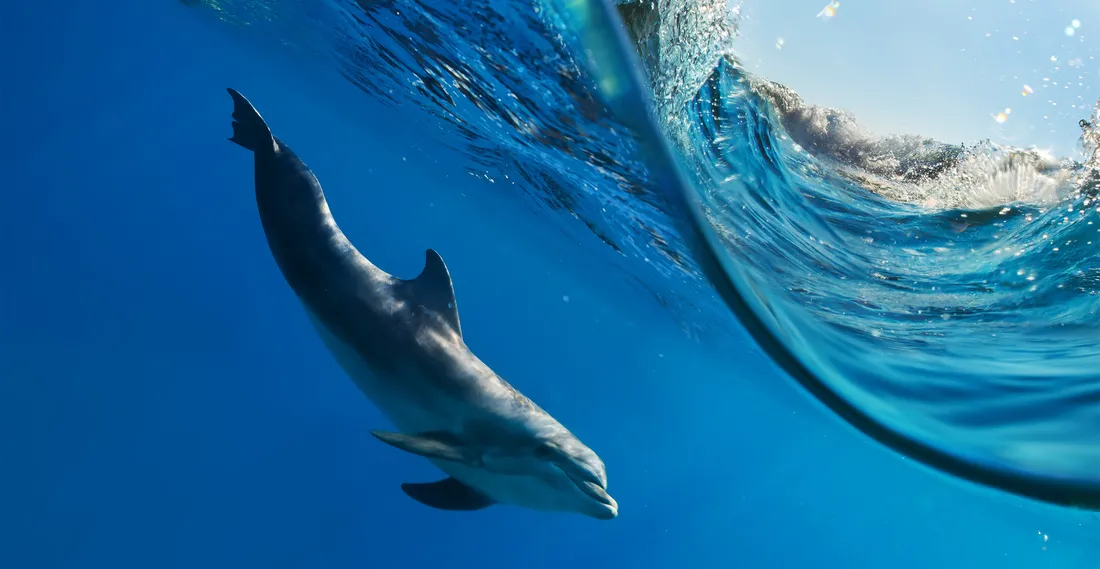
In the vast and often unpredictable underwater world, dolphins navigate with extraordinary precision. They hunt, communicate, and travel through murky depths using a biological sonar system known as echolocation. Today, scientists and engineers are translating this remarkable natural ability into cutting-edge technology known as Dolphin Radar: Bio-Inspired Sonar Intelligence—a new frontier in sensing, detection, and autonomous navigation.
Understanding Dolphin Echolocation
Dolphins rely on echolocation to “see” their environment through sound. They emit high-frequency clicks that travel through water, bounce off objects, and return as echoes. By analyzing the timing, frequency, and intensity of these echoes, dolphins can determine an object’s:
- Distance
- Size
- Shape
- Density
- Speed
- Direction
What makes dolphin sonar exceptional is its precision. Dolphins can detect small objects buried under sand, distinguish between materials, and even identify internal structures of prey. Their sonar system is adaptive, energy-efficient, and highly intelligent—qualities that engineers aim to replicate in artificial systems.
From Nature to Technology: The Rise of Dolphin Radar
Traditional radar and sonar systems rely on fixed frequencies and linear signal processing. While effective, they can struggle in complex environments such as cluttered waters, crowded urban areas, or noisy industrial settings.
Dolphin Radar applies biomimicry—the practice of imitating nature’s solutions—to develop smarter sensing systems. Instead of merely transmitting and receiving signals, bio-inspired sonar systems incorporate:
- Adaptive frequency modulation
- Real-time signal interpretation
- Intelligent echo classification
- Machine learning integration
- Energy-efficient pulse emission
By modeling dolphin echolocation behavior, researchers are designing radar and sonar systems that can dynamically adjust to environmental changes, much like dolphins do in the wild.
Key Technologies Behind Dolphin Radar
1. Adaptive Signal Emission
Dolphins vary the intensity and frequency of their clicks depending on the task—short bursts for close-range scanning and rapid sequences when tracking fast-moving prey. Similarly, Dolphin Radar systems adjust signal strength and frequency patterns in real time to improve detection accuracy.
2. AI-Powered Echo Interpretation
Unlike conventional systems that rely solely on signal amplitude, Dolphin Radar integrates artificial intelligence and machine learning algorithms. These systems analyze echo patterns to classify objects based on shape, texture, and movement behavior.
For example, in marine applications, Dolphin Radar can differentiate between marine life, debris, and submarines. In industrial settings, it can detect structural anomalies within pipelines or machinery.
3. Noise Filtering and Environmental Awareness
Underwater environments are filled with noise from waves, vessels, marine animals, and human activity. Dolphins naturally filter out irrelevant acoustic information. Bio-inspired radar systems replicate this capability using advanced digital signal processing and neural networks to reduce interference and enhance target clarity.
4. Energy Efficiency
Dolphins use minimal energy while maintaining high detection performance. Engineers are studying their pulse patterns to design radar systems that conserve power—an essential feature for autonomous drones, underwater vehicles, and remote sensing platforms.
Applications of Dolphin Radar
The integration of bio-inspired sonar intelligence has wide-ranging applications across industries.
Marine Exploration and Research
Dolphin Radar enhances underwater mapping, marine life monitoring, and seabed exploration. It allows researchers to obtain detailed acoustic images without disturbing ecosystems.
Defense and Security
Military and maritime security systems benefit from improved target recognition and stealth detection. Dolphin-inspired sonar can identify small or low-noise objects that traditional systems might miss.
Autonomous Underwater Vehicles (AUVs)
Self-driving underwater robots require reliable navigation systems. Dolphin Radar enables precise obstacle avoidance, terrain mapping, and coordinated swarm behavior in challenging conditions.
Healthcare Imaging
The principles of echolocation have influenced advanced ultrasound imaging technologies. By improving echo interpretation algorithms, Dolphin Radar research may lead to clearer, more accurate medical diagnostics.
Industrial Inspection
Bio-inspired sonar systems can inspect pipelines, underwater infrastructure, and submerged equipment with high precision, detecting cracks, corrosion, or internal defects.
Advantages Over Traditional Radar Systems
Dolphin Radar stands out due to several distinct advantages:
- Higher object discrimination accuracy
- Improved performance in cluttered environments
- Dynamic adaptability
- Reduced false positives
- Lower energy consumption
- Enhanced real-time processing
By moving beyond rigid signal transmission models, bio-inspired sonar systems offer a smarter, more responsive sensing solution.
The Role of Artificial Intelligence
Artificial intelligence is central to the success of Dolphin Radar. While nature provides the blueprint, AI enables the system to learn, adapt, and improve over time.
Machine learning models can be trained on thousands of echo signatures, allowing the system to recognize patterns and predict object behavior. Deep learning techniques further enhance classification accuracy, making Dolphin Radar a truly intelligent sensing platform rather than a passive detection tool.
In essence, AI transforms sonar data into actionable insight.
Challenges and Future Directions
Despite its promise, Dolphin Radar technology faces several challenges:
- Replicating the full complexity of dolphin acoustic processing
- Developing compact and cost-effective hardware
- Managing vast amounts of real-time acoustic data
- Ensuring reliability in extreme environments
However, advancements in computational power, sensor miniaturization, and neural network optimization continue to push the boundaries of what is possible.
Future developments may include:
- Swarm-based sonar networks
- Cross-domain radar-sonar hybrid systems
- Integration with satellite and aerial surveillance
- Fully autonomous ocean monitoring platforms
As research progresses, Dolphin Radar could redefine how machines perceive and interact with their surroundings.
Conclusion
Dolphin Radar: Bio-Inspired Sonar Intelligence represents a powerful convergence of biology, engineering, and artificial intelligence. By studying one of nature’s most sophisticated navigation systems, scientists are building smarter, more adaptive radar technologies capable of operating in complex and dynamic environments.
Just as dolphins have mastered the art of acoustic perception beneath the waves, Dolphin Radar aims to bring that same level of intelligence and precision to modern sensing systems. Through biomimicry and innovation, the future of detection technology is becoming not only more advanced—but more natural.