
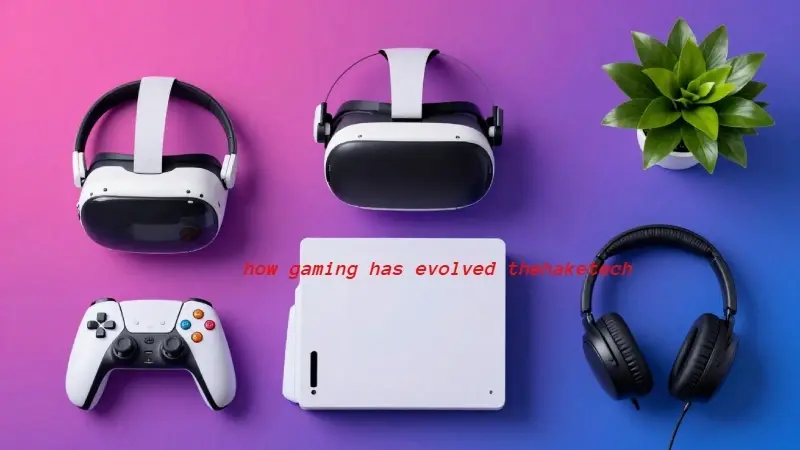
Gaming has transformed from simple pixelated screens into vast digital universes powered artificial intelligence, cloud computing, and immersive reality. What once began as a niche hob is now a global industry worth hundreds of billions of dollars, influencing entertainment, technology, and even social interaction. In this TheHakeTech Insight, we explore how gaming has evolved over the decades—and where it’s heading next.
The Birth of Video Games: The Arcade Era
The journey began in the 1970s with arcade classics like Pong and Space Invaders. These early games featured simple graphics and basic mechanics, yet they captured the imagination of millions. Arcades became social hubs, introducing competitive gaming long before online leaderboards existed.
Soon after, home consoles such as the Atari 2600 brought gaming into living rooms. This shift marked the beginning of gaming as a household entertainment medium.
The 8-Bit & 16-Bit Revolution
The 1980s and early 1990s saw rapid innovation. Companies like Nintendo and Sega dominated the market with iconic consoles and franchises.
Games such as Super Mario Bros. and Sonic the Hedgehog introduced memorable characters, storytelling elements, and improved graphics. The evolution from 8-bit to 16-bit systems significantly enhanced gameplay depth, sound design, and visual appeal.
Gaming was no longer just about high scores—it became about adventure and immersion.
The 3D Era and Console Wars
The mid-1990s introduced 3D gaming, forever changing the industry. Consoles like the PlayStation and the Nintendo 64 pushed technical boundaries.
Titles such as Super Mario 64 and Final Fantasy VII demonstrated cinematic storytelling and expansive worlds. This era marked the beginning of immersive 3D environments and complex narratives.
The “console wars” intensified innovation, driving competition and improving gaming hardware generation after generation.
Online Gaming & Multiplayer Expansion
The 2000s brought internet connectivity to consoles and PCs, revolutionizing how people played. Online multiplayer games such as World of Warcraft and Call of Duty 4: Modern Warfare connected millions worldwide.
Gaming shifted from a solo or couch co-op activity to a global, interactive experience. Communities formed around competitive gaming, paving the way for esports tournaments and streaming platforms.
This era also saw the rise of digital distribution, reducing reliance on physical discs and enabling instant downloads.
Mobile Gaming & Accessibility
Casual hits like Angry Birds and Clash of Clans reached audiences beyond traditional gamers.
Mobile gaming democratized the industry—anyone with a smartphone could become a gamer. Microtransactions and free-to-play models reshaped revenue strategies, influencing even console and PC titles.
Virtual Reality, Cloud Gaming & AI
Today, gaming stands at the intersection of powerful hardware and cloud-based innovation. Platforms like PlayStation 5 and Xbox Series X deliver ultra-fast load times and photorealistic graphics.
Meanwhile, virtual reality systems such as Meta Quest 2 offer immersive experiences that blur the line between the digital and physical worlds.
Cloud gaming services are reducing hardware dependency, allowing users to stream high-end games directly to devices. Artificial intelligence enhances NPC behavior, procedural world-building, and personalized gameplay experiences.
Streaming, Content Creation & Esports
Gaming is no longer just about playing—it’s also about watching and creating. Competitive tournaments fill stadiums, and streamers build global fanbases. Esports has become a billion-dollar industry, transforming gaming into a professional career path.
The evolution of gaming has intertwined entertainment, social media, and technology into a single ecosystem.
The Future of Gaming
Looking ahead, gaming is expected to integrate more deeply with augmented reality (AR), artificial intelligence, and even the metaverse concept. With advancements in processing power and global connectivity, future games will likely become more immersive, interactive, and socially integrated.
From arcade machines to cloud servers, the journey of gaming reflects rapid technological progress and cultural change.
Final Thoughts – TheHakeTech Insight
Gaming has evolved from simple 2D entertainment into a complex, immersive, and socially connected digital universe. Each generation of technology has expanded what’s possible, reshaping how we play, connect, and experience stories.
At TheHakeTech, we believe gaming’s evolution is far from over—it’s only leveling up.