
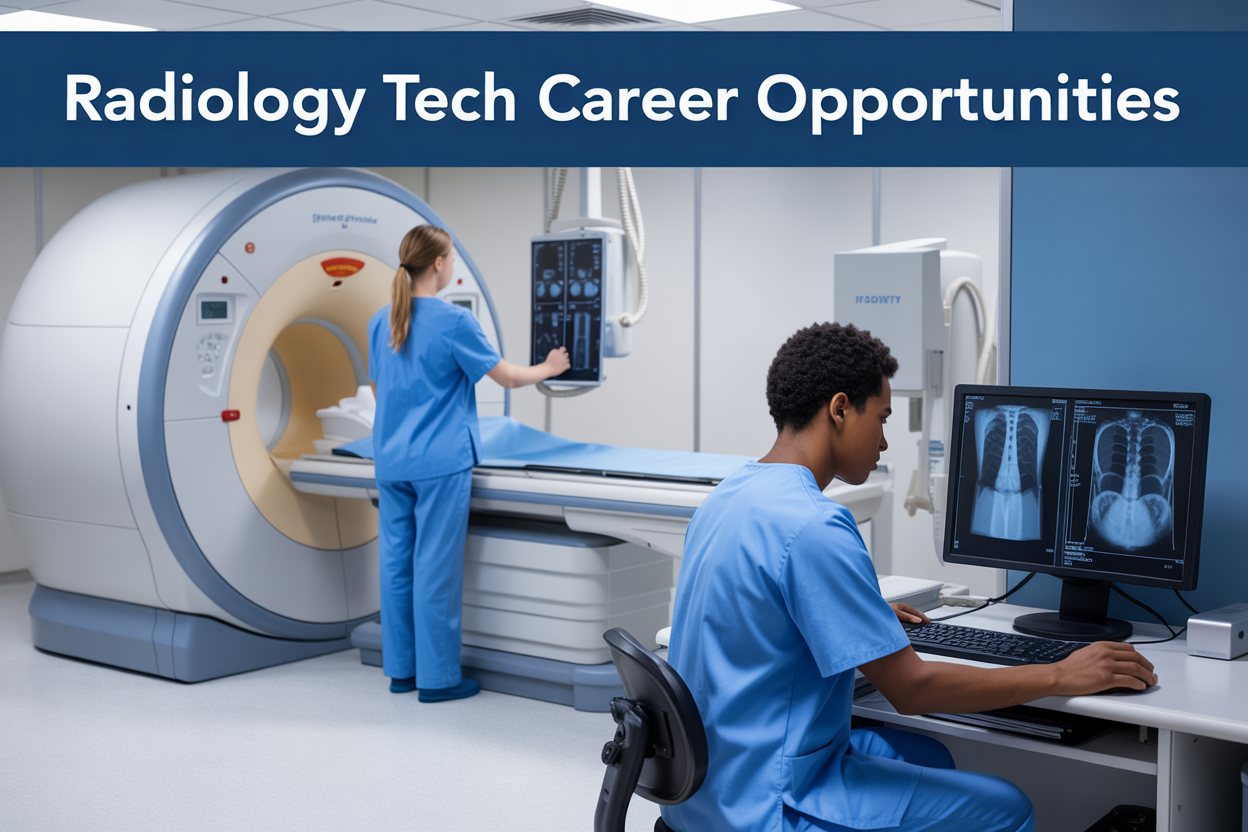
The radiology field provides multiple entry points and specialization options. You can start as a radiology tech assistant while pursuing your certification, work in local hospitals and clinics, or explore lucrative travel radiology tech jobs that take you across the country. Many professionals don’t realize how many radiologic tech jobs near me are actually available in their area.
We’ll break down the different types of radiology tech positions you can pursue locally and examine why travel radiology tech jobs have become increasingly popular among experienced technologists. You’ll also get detailed radiology tech job descriptions that explain daily responsibilities, required skills, and typical work environments. Finally, we’ll explore assistant roles that can serve as stepping stones into the profession and help you understand which path aligns best with your career goals.
Radiology tech jobs offer diverse career paths for healthcare professionals who want to combine technical skills with patient care. This comprehensive guide is designed for aspiring radiologic technologists, current students, and healthcare workers considering a career change into medical imaging.
The radiology field provides multiple entry points and specialization options. You can start as a radiology tech assistant while pursuing your certification, work in local hospitals and clinics, or explore lucrative travel radiology tech jobs that take you across the country. Many professionals don’t realize how many radiologic tech jobs near me are actually available in their area.
We’ll break down the different types of radiology tech positions you can pursue locally and examine why travel radiology tech jobs have become increasingly popular among experienced technologists. You’ll also get detailed radiology tech job descriptions that explain daily responsibilities, required skills, and typical work environments. Finally, we’ll explore assistant roles that can serve as stepping stones into the profession and help you understand which path aligns best with your career goals.
Understanding Radiology Technologist Career Opportunities
Core responsibilities and daily tasks that define the profession
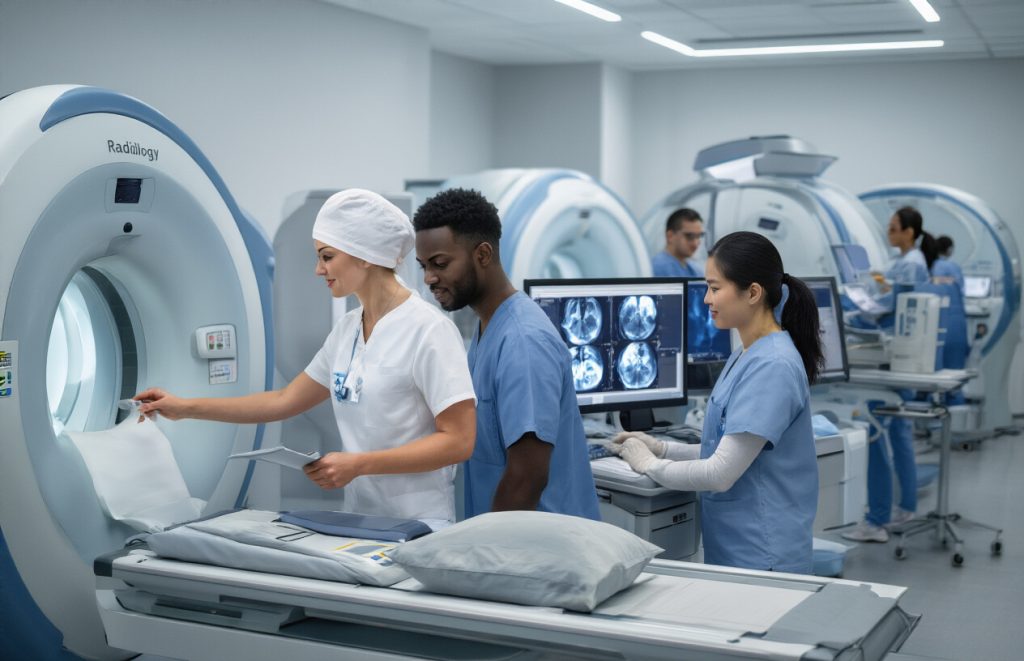
Radiology technologists play a crucial role in modern healthcare operating sophisticated imaging equipment to help doctors diagnose medical conditions. Your typical day involves positioning patients for various scans, operating X-ray machines, CT scanners, MRI equipment, and mammography units. You’ll spend time explaining procedures to nervous patients, ensuring their comfort and safety while capturing high-quality images that doctors rely on for accurate diagnoses.
Patient interaction forms a significant part of the job. You’ll prepare patients for procedures, answer their questions, and maintain detailed records of each examination. Safety protocols are paramount – you’ll monitor radiation exposure, use protective equipment, and follow strict guidelines to protect both patients and yourself.
Technical maintenance also falls under your responsibilities. This includes calibrating equipment, performing quality control checks, and working with radiologists to review images for clarity and diagnostic value. Many radiology tech jobs require you to work in different departments throughout your shift, from emergency rooms to outpatient clinics.
Essential skills and qualifications needed for success
Breaking into radiologic tech jobs requires completing an accredited radiologic technology program, typically taking 1-4 years depending on the degree level. Most positions require an associate degree, though some employers prefer bachelor’s degrees for advancement opportunities.
Technical skills are fundamental. You need proficiency with complex imaging equipment, computer systems for image processing, and understanding of anatomy and physiology. Math skills help with calculating radiation doses and positioning measurements. Communication skills are equally important since you’ll interact with patients experiencing pain, anxiety, or fear.
Critical thinking abilities help you adapt procedures for patients with mobility issues or medical devices. Physical stamina is necessary since you’ll be on your feet most of the day, helping move patients and operating heavy equipment. Attention to detail ensures accurate positioning and image quality that doctors can rely on for diagnoses.
Professional certification through the American Registry of Radiologic Technologists (ARRT) is required in most states. Continuing education keeps you current with advancing technology and maintains your certification status.
Career growth potential and advancement pathways
Radiology tech jobs offer excellent advancement opportunities across multiple pathways. Specialization opens doors to higher-paying positions in areas like computed tomography (CT), magnetic resonance imaging (MRI), mammography, or nuclear medicine. Each specialization requires additional training and certification but typically increases earning potential 10-25%.
Leadership roles include senior technologist positions, department supervisors, or program directors. These roles combine clinical expertise with administrative responsibilities like staff scheduling, budget management, and quality assurance programs. Some technologists transition into education, teaching in radiologic technology programs at colleges and universities.
Travel radiology tech jobs provide another exciting career path. These positions offer higher pay, housing allowances, and the opportunity to work in different healthcare facilities across the country. Travel positions typically require at least one year of experience and offer flexibility for those seeking adventure alongside their career.
Management tracks lead to department administration, where you’d oversee entire radiology departments, manage budgets, and coordinate with other hospital departments. Some technologists pursue additional education to become radiologist assistants or even continue to medical school.
Salary expectations across different specializations
Entry-level radiology tech jobs near me typically start around $45,000-$55,000 annually, with significant variation based on location and facility type. Hospital positions generally offer higher starting salaries compared to outpatient clinics, while urban areas typically pay more than rural locations.
Specialized technologists command premium salaries. MRI technologists often earn $60,000-$80,000 annually, while CT specialists can expect $55,000-$75,000. Nuclear medicine technologists frequently earn the highest salaries, ranging from $65,000-$90,000 per year.
Travel radiology tech jobs offer some of the highest compensation packages. Base salaries range from $70,000-$100,000, plus housing allowances, meal stipends, and travel reimbursements. Total compensation packages for travel positions can exceed $120,000 annually.
Geographic location significantly impacts earning potential. California, New York, and Massachusetts consistently offer the highest salaries, while southern and midwest states typically offer lower but still competitive wages. Government positions, including VA hospitals and military facilities, often provide excellent benefits packages that offset slightly lower base salaries.
| Specialization | Entry Level | Mid-Career | Senior Level |
|---|---|---|---|
| General Radiography | $45,000-$55,000 | $55,000-$65,000 | $65,000-$75,000 |
| CT Technologist | $50,000-$60,000 | $60,000-$70,000 | $70,000-$80,000 |
| MRI Technologist | $55,000-$65,000 | $65,000-$75,000 | $75,000-$85,000 |
| Nuclear Medicine | $60,000-$70,000 | $70,000-$80,000 | $80,000-$95,000 |
Finding Local Radiology Tech Positions in Your Area

Top job search platforms and healthcare-specific websites
Major job boards like Indeed, LinkedIn, and Glassdoor consistently post radiology tech jobs near me from hospitals, clinics, and imaging centers nationwide. These platforms allow you to set location-based alerts for radiologic tech jobs in your specific area, ensuring you never miss new opportunities.
Healthcare-focused job sites offer more targeted results for radiology tech jobs. Websites like HealthJobs.org, Health eCareers, and AMN Healthcare specialize in medical positions and often feature exclusive listings from major healthcare systems. These platforms typically provide detailed filters for experience level, shift preferences, and specific imaging modalities.
Hospital websites deserve your direct attention. Many healthcare organizations post radiology tech jobs exclusively on their career pages before listing them elsewhere. Check the careers section of local hospitals, outpatient imaging centers, and multi-specialty clinics weekly. Some facilities also offer email notifications for new radiology positions.
Professional organizations like the American Society of Radiologic Technologists (ASRT) maintain job boards specifically for certified professionals. These listings often come from reputable employers seeking qualified candidates and may include positions not advertised on general job sites.
Networking strategies with local hospitals and imaging centers
Building relationships with hiring managers and department supervisors at near facilities creates opportunities before positions are publicly posted. Attend local ARRT chapter meetings, continuing education seminars, and healthcare job fairs to connect with industry professionals in your area.
Visit imaging departments during slower periods to introduce yourself to staff and supervisors. Many facilities appreciate proactive candidates who demonstrate genuine interest in their organization. Bring copies of your resume and be prepared to discuss your experience and career goals professionally.
Volunteer opportunities at local hospitals can provide valuable networking connections while demonstrating your commitment to healthcare. Many facilities remember dedicated volunteers when radiologic tech jobs near me become available.
Social media platforms, particularly LinkedIn, help you connect with radiology professionals and stay informed about job openings. Join local healthcare groups and participate in discussions to increase your visibility within the community.
Working with healthcare recruiters and staffing agencies
Healthcare staffing agencies specialize in placing radiology technologists and often have established relationships with multiple facilities in your area. These agencies can match your skills and preferences with available radiology tech jobs while providing guidance throughout the application process.
Reputable agencies like Cross Country Healthcare, Medical Solutions, and Soliant Health maintain databases of qualified candidates and actively work to place professionals in permanent positions. They often have access to unadvertised opportunities and can provide insights about specific employers and their workplace cultures.
Staffing agencies also offer temporary and contract positions that can lead to permanent employment. Many facilities use temp-to-hire arrangements to evaluate candidates before making full-time offers, making agency relationships valuable for accessing these opportunities.
Working with multiple agencies increases your exposure to different radiology tech jobs while allowing you to compare opportunities and compensation packages. Most agencies provide free services to job seekers, as employers pay their placement fees.
Exploring High-Paying Travel Radiology Positions

Benefits of travel assignments including housing and travel allowances
Travel radiology tech jobs offer incredible financial perks that make them stand out from traditional positions. Most travel assignments provide fully furnished housing or generous housing stipends ranging from $1,500 to $3,000 per month, depending on the location. This means you can live in prime areas without worrying about lease commitments or furniture purchases.
Travel allowances typically cover round-trip transportation to your assignment location, plus many companies provide rental car stipends or mileage reimbursement for local transportation. Weekly pay rates for travel radiology positions often exceed permanent roles 20-40%, with many technologists earning $2,000-$3,500 per week depending on their specialty and the assignment’s urgency.
Healthcare benefits usually kick in quickly, often within your first week of assignment. Many agencies also offer completion bonuses, referral bonuses, and loyalty programs that can add thousands to your annual income. The tax advantages are substantial too – you can often claim tax-free stipends for housing and meals when working away from your tax home.
Popular destinations and regions with highest demand
California leads the pack for high-paying travel radiology tech jobs, particularly in Los Angeles, San Francisco, and San Diego, where critical shortages drive premium pay rates. Texas offers abundant opportunities in Houston, Dallas, and Austin, with many facilities seeking experienced technologists for both short and long-term contracts.
Florida’s year-round appeal makes it a favorite destination, especially Miami, Tampa, and Orlando, where tourism and growing populations create steady demand. New York’s metropolitan areas consistently need travel radiologic technicians, offering some of the highest compensation packages in the country.
Rural areas across the Midwest and Mountain West states often provide the most lucrative opportunities due to severe staffing shortages. States like North Dakota, Wyoming, and Alaska frequently offer premium pay packages that can significantly boost your annual earnings. Hawaii remains highly competitive but offers unique lifestyle benefits that many find worth the application process.
Winter destinations in Arizona and Nevada see increased demand during peak season, while summer assignments in tourist areas like coastal Maine or Colorado mountain towns combine work with recreational opportunities.
Contract lengths and assignment flexibility options
Most travel radiology positions offer 13-week standard contracts, which align perfectly with seasonal planning and provide enough time to truly experience a new location. Many facilities also offer 8-week, 26-week, and even permanent placement options for those who find locations they love.
Extension opportunities are common when you perform well, allowing you to stay in desirable locations for 6-12 months or longer. Some agencies specialize in short-term crisis contracts lasting 2-4 weeks, perfect for emergency coverage situations that often pay premium rates.
Day shift, night shift, and weekend-only positions provide scheduling flexibility to match your lifestyle preferences. Many contracts include overtime opportunities, and some facilities offer guaranteed hours to ensure consistent income throughout your assignment.
Per diem positions offer the ultimate flexibility, allowing you to work when you want while maintaining control over your schedule. These roles work well for experienced technologists who want to supplement income between permanent positions or travel assignments.
Requirements and certifications for travel positions
Travel radiology tech jobs require current ARRT certification and state licensure in your assignment location. Most agencies prefer technologists with at least one year of recent experience in their specialty, though some accept new graduates for specific high-demand modalities.
Multi-state licensing through compact state agreements can streamline the application process significantly. BLS certification is mandatory, and many positions require advanced certifications like ACLS depending on the facility type and department needs.
Background checks and drug screenings are standard requirements, along with up-to-date immunizations and TB testing. Many facilities also require hospital-specific training modules that can be completed online before your start date.
Specialized modalities like MRI, CT, mammography, or interventional radiology often command higher pay rates and have more opportunities. Cross-training in multiple modalities makes you more marketable and opens doors to premium assignments that require versatile technologists who can float between departments as needed.
Radiology Assistant Roles and Career Entry Points
Differences between technologist and assistant responsibilities
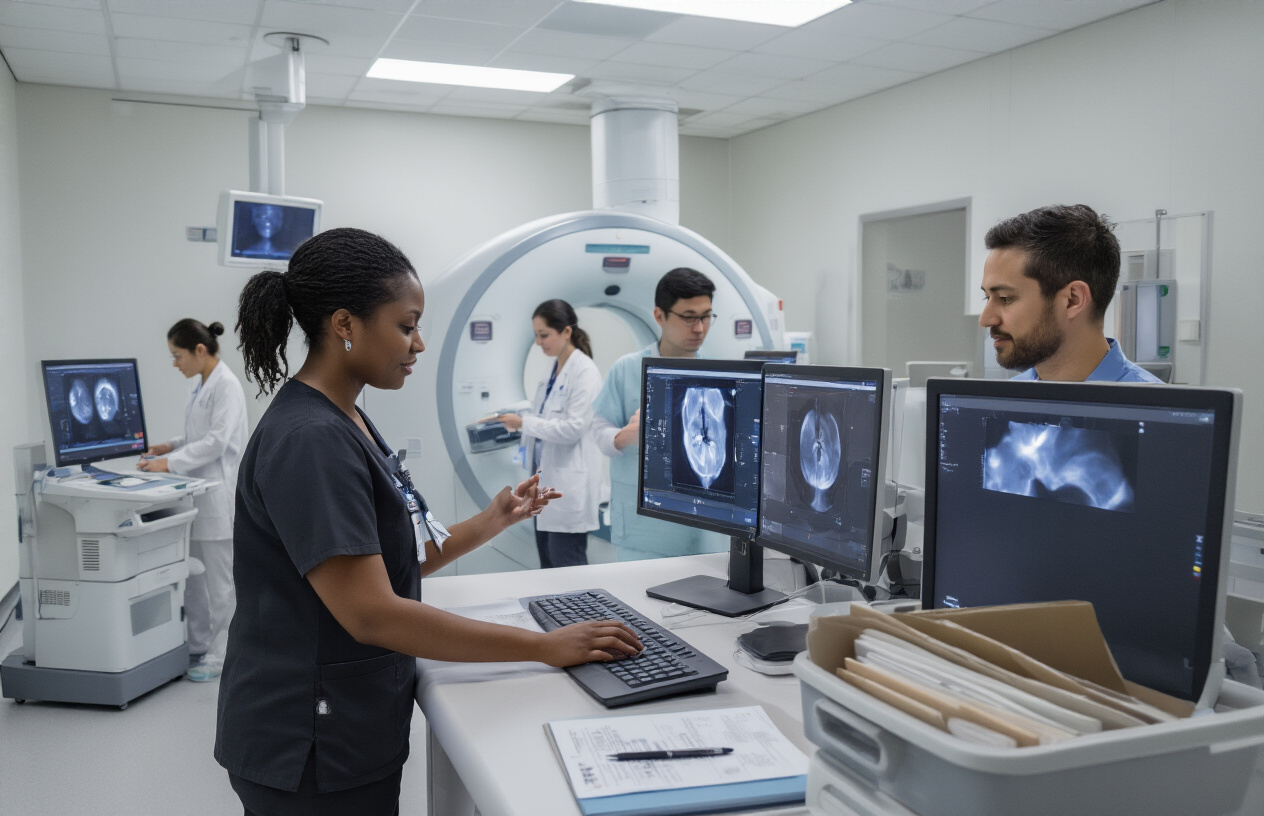
Radiology assistants and radiologic technologists serve different functions in medical imaging departments, though their roles often complement each other. Radiology tech assistant jobs typically involve supporting registered technologists with patient care, equipment preparation, and administrative tasks. Assistants help position patients, maintain imaging equipment, and ensure exam rooms are clean and properly stocked between procedures.
Technologists carry significantly more responsibility, operating complex imaging equipment independently and making critical decisions about image quality and patient safety. They adjust technical parameters, evaluate images for diagnostic quality, and communicate directly with radiologists about findings. While assistants work under direct supervision, registered technologists often supervise other staff members and may work with minimal oversight.
| Radiology Assistant | Radiologic Technologist |
|---|---|
| Patient positioning assistance | Independent equipment operation |
| Basic equipment maintenance | Image quality evaluation |
| Administrative support | Protocol selection and modification |
| Direct supervision required | Supervisory responsibilities |
| Limited radiation safety authority | Full radiation safety compliance |
The scope of practice varies significantly between these roles. Assistants cannot operate radiation-producing equipment independently or make adjustments to imaging protocols without technologist approval. They focus on patient comfort, workflow efficiency, and basic technical support rather than diagnostic imaging procedures.
Training programs and certification pathways for assistants
Entry-level radiology assistant positions often require completion of specialized training programs ranging from several weeks to six months. Many hospitals and imaging centers offer on-the-job training programs that combine classroom instruction with hands-on experience under experienced technologists.
Community colleges and technical schools provide formal radiology assistant certificate programs covering:
- Basic anatomy and medical terminology
- Patient care and communication skills
- Radiation safety fundamentals
- Medical ethics and HIPAA compliance
- Equipment operation basics
- Emergency procedures and first aid
Some states require certification through organizations like the American Registry of Radiologic Technologists (ARRT) for limited scope practice. These credentials allow assistants to perform specific tasks under technologist supervision, such as operating basic imaging equipment or handling contrast materials.
Online training options have expanded access to education for those seeking radiology tech assistant jobs in rural areas or with scheduling constraints. These programs typically combine virtual coursework with clinical rotations at local healthcare facilities.
How assistant roles lead to full technologist positions
Working as a radiology assistant provides valuable exposure to medical imaging workflows and helps individuals determine if pursuing full technologist education aligns with their career goals. Many assistants use their positions to gain clinical experience while completing prerequisite courses for radiologic technology programs.
Assistant experience offers several advantages when applying to competitive radiologic technology programs:
- Demonstrated commitment to healthcare
- Practical understanding of imaging procedures
- Professional references from supervisors
- Clinical exposure to various imaging modalities
- Established relationships with potential employers
Many healthcare systems offer tuition assistance or scholarship programs for employees pursuing advanced education. Assistants often continue working part-time while attending school, maintaining income and benefits during their education.
The transition from assistant to technologist typically requires completing an accredited radiologic technology program, which ranges from 18 months to four years depending on the degree level. Associate degree programs are most common, though bachelor’s degree options provide additional career advancement opportunities.
Career progression timelines vary, but motivated individuals can advance from assistant to registered technologist within two to four years. Some employers guarantee positions for assistants who successfully complete accredited programs, making this pathway particularly attractive for those seeking stable employment in growing radiologic tech jobs markets.
Comprehensive Job Descriptions and Role Expectations

Specialized areas including CT, MRI, and mammography positions
Each specialty within radiology tech jobs demands unique skills and training. CT technologists operate computed tomography scanners, creating detailed cross-sectional images of patients’ bodies. They master contrast injection protocols, positioning techniques for different body parts, and radiation safety measures. These positions require additional certification beyond basic radiologic technology credentials.
MRI technologists work with magnetic resonance imaging equipment, which uses powerful magnetic fields instead of radiation. This role demands understanding of contraindications like pacemakers or metal implants, patient screening protocols, and managing claustrophobic patients during lengthy scans. The work environment stays cooler due to equipment requirements, and techs need specialized training in MRI safety zones.
Mammography technologists focus exclusively on breast imaging for cancer screening and diagnostic purposes. This specialty requires exceptional patient communication skills since many patients feel anxious about potential findings. Technologists position patients precisely for optimal breast tissue visualization while maintaining dignity and comfort. Quality control procedures and equipment calibration form critical daily responsibilities.
Nuclear medicine technologists handle radioactive materials to create diagnostic images showing organ function. They prepare and administer radiopharmaceuticals, operate gamma cameras, and monitor patients for adverse reactions. This specialty requires radiation safety training and understanding of decay times for different isotopes.
Interventional radiology technologists assist with minimally invasive procedures performed under imaging guidance. They work in sterile environments, helping physicians navigate catheters through blood vessels or perform biopsies. These positions often involve on-call schedules and emergency procedures.
Hospital versus outpatient clinic work environments
Hospital radiologic tech jobs offer round-the-clock operations with diverse patient populations and emergency situations. Technologists encounter trauma cases, critically ill patients requiring portable imaging, and complex multi-department procedures. Hospitals provide exposure to advanced equipment and cutting-edge technologies, making them excellent learning environments for career growth.
Emergency department work brings unpredictable schedules and high-stress situations. Technologists must work efficiently under pressure, handling everything from broken bones to life-threatening conditions. Night shifts and weekend rotations come standard in hospital settings.
Outpatient imaging centers typically operate during regular business hours with scheduled appointments. These facilities focus on elective procedures and routine screenings, creating more predictable workdays. Patient interactions tend to be less urgent, allowing for better rapport building and detailed explanations of procedures.
Private practices and specialty clinics offer intimate work environments where technologists often develop ongoing relationships with referring physicians and returning patients. These settings may specialize in specific imaging types like orthopedic imaging or cardiac catheterization.
| Work Environment | Schedule | Patient Acuity | Equipment Variety | Career Growth |
|---|---|---|---|---|
| Hospital | 24/7 rotation | High/Emergency | Extensive | High |
| Outpatient Center | Business hours | Moderate/Elective | Moderate | Moderate |
| Private Practice | Regular hours | Low/Routine | Limited | Limited |
Equipment operation and patient care responsibilities
Modern imaging equipment requires technical expertise and continuous learning as technology evolves. Technologists calibrate machines daily, perform quality assurance tests, and troubleshoot technical issues. They adjust exposure parameters based on patient size, medical conditions, and imaging requirements while maintaining optimal image quality with minimal radiation exposure.
Patient positioning represents a fundamental skill requiring anatomical knowledge and attention to detail. Technologists ensure proper alignment for diagnostic-quality images while considering patient comfort and mobility limitations. They adapt techniques for pediatric, geriatric, and disabled patients, often using immobilization devices or modified positioning aids.
Communication skills prove essential when explaining procedures to anxious patients. Technologists provide clear instructions during exams, obtain relevant medical histories, and address concerns about radiation exposure or contrast reactions. They recognize signs of patient distress and respond appropriately to medical emergencies.
Infection control protocols demand strict adherence to cleaning procedures between patients. Technologists sanitize equipment surfaces, change table linens, and follow proper hand hygiene. They identify patients requiring isolation precautions and implement appropriate protective measures.
Contrast administration requires understanding of patient allergies, kidney function, and medication interactions. Technologists monitor patients for adverse reactions during and after contrast injection, maintaining emergency supplies and knowing emergency response procedures.
Documentation and safety protocol requirements
Accurate documentation forms a legal and medical necessity in radiology tech job description responsibilities. Technologists record patient information, technical factors used, contrast administered, and any complications or patient reactions. Electronic medical records require precise data entry and adherence to facility-specific protocols.
Radiation safety protocols protect both patients and staff from unnecessary exposure. Technologists use lead aprons, thyroid shields, and gonadal protection when appropriate. They monitor radiation badges, follow ALARA principles (As Low As Reasonably Achievable), and maintain controlled access to radiation areas.
Quality assurance documentation tracks equipment performance through regular testing procedures. Technologists perform daily warm-ups, weekly phantom scans, and monthly calibrations while recording results for regulatory compliance. Any equipment malfunctions require immediate documentation and reporting.
HIPAA compliance governs patient privacy protection throughout the imaging process. Technologists secure patient information, limit access to authorized personnel, and maintain confidentiality during patient interactions. They understand penalties for privacy violations and follow facility policies for information sharing.
Incident reporting procedures require documentation of any patient injuries, equipment malfunctions, or safety violations. Technologists complete detailed reports describing circumstances, actions taken, and outcomes. These reports contribute to facility safety improvement initiatives and risk management programs.
Continuing education documentation proves essential for license renewal and career advancement. Most states require annual training hours covering radiation safety, patient care, and new imaging technologies. Technologists maintain records of completed coursework, certifications earned, and professional development activities.
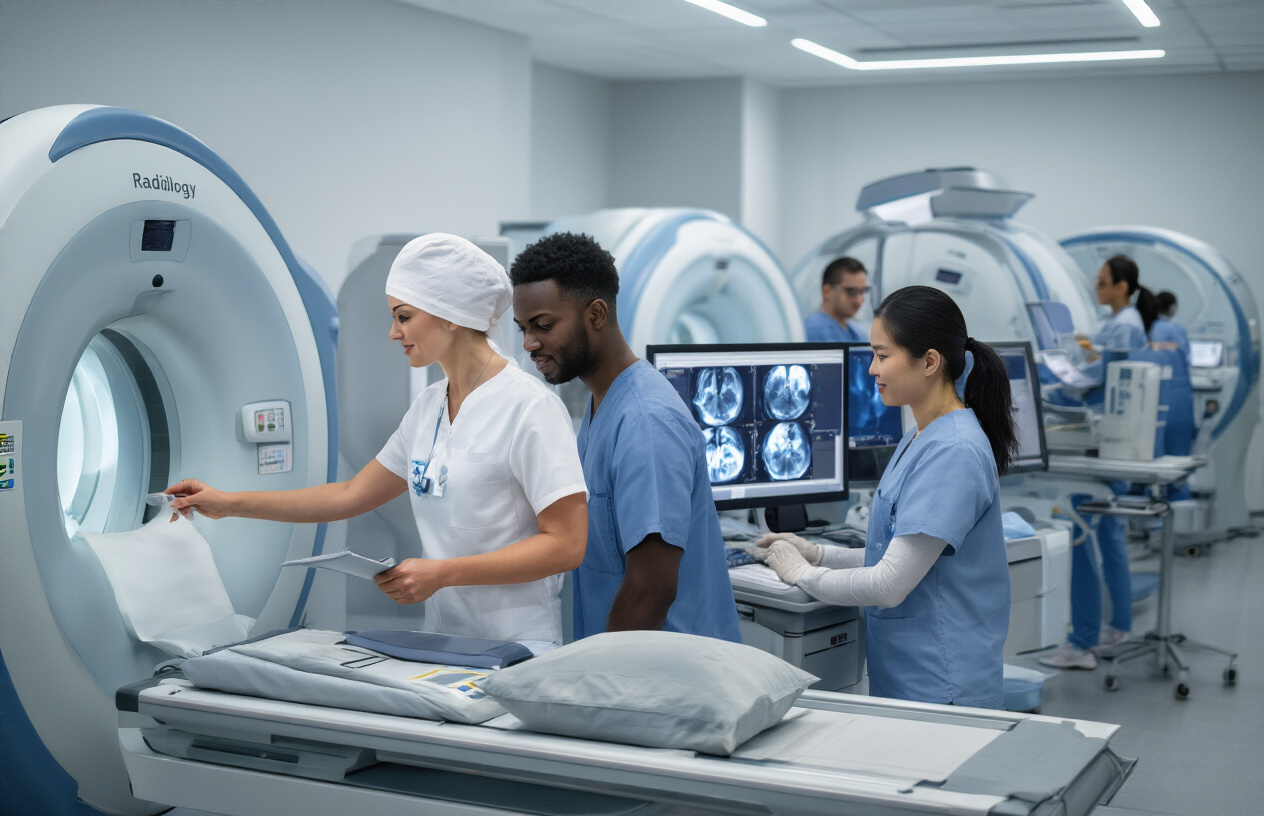
The radiology tech field offers a wealth of opportunities that can match your lifestyle and career goals. From stable local positions in hospitals and clinics to exciting travel assignments that let you explore new places while earning top dollar, there’s something for everyone. Entry-level assistant roles provide a great stepping stone for newcomers, while experienced techs can command excellent salaries and benefits packages.
Your next step is to identify which path aligns best with your personal situation and professional aspirations. Start checking job boards, hospital websites, and staffing agencies in your area to see what positions are currently available. Don’t overlook the networking power of connecting with current radiology professionals – they often know about openings before they’re posted publicly. With the growing demand for medical imaging services, now is an excellent time to launch or advance your career in radiology technology.