
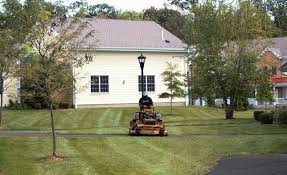
A well-maintained lawn adds beauty, value, and functionality to any property. Whether it surrounds a cozy home or a large commercial complex, a healthy lawn creates a welcoming and professional atmosphere. While both residential and commercial lawn care share the same basic goal—to keep the grass lush, green, and free from weeds or pests—they differ in scale, strategy, and complexity. Understanding these differences is essential for property owners, groundskeepers, and landscape professionals looking to achieve optimal results in any environment.
Residential Lawn Care: A Personalized Approach
Residential lawn care focuses on the individual needs of homeowners and their outdoor living spaces. These spaces are typically smaller than commercial properties and are used for leisure, family activities, gardening, and sometimes entertainment. Because residential lawns are extensions of a person’s home, care is often personalized to reflect the homeowner’s aesthetic preferences and lifestyle.
The primary components of residential lawn care include mowing, edging, watering, fertilizing, weed control, pest management, and seasonal maintenance. Mowing is usually performed weekly during the growing season, with the mower height adjusted according to the type of grass. Homeowners may use either push mowers or small ride-on mowers depending on the size of the yard.
Watering is another essential task and is most efficient when done early in the morning or late in the evening to reduce evaporation. Many homeowners install automated sprinkler systems to simplify this task. Fertilization is typically done two to four times a year, using either organic or synthetic products tailored to the local climate and soil conditions.
Weed and pest control in residential settings often balances effectiveness with safety, especially in homes with children or pets. More and more homeowners are turning to eco-friendly products and integrated pest management practices to minimize chemical use. Seasonal care includes tasks such as leaf removal in the fall, aeration to reduce soil compaction, and overseeding to fill in bare patches.
Commercial Lawn Care: Efficiency and Consistency
Commercial lawn care involves maintaining larger properties such as office parks, apartment complexes, retail centers, hospitals, and schools. These spaces must meet high standards for safety, cleanliness, and visual appeal, often under strict time and budget constraints. The emphasis is on uniformity, reliability, and long-term landscape management.
Due to the scale and complexity, commercial lawn care is typically handled professional landscaping companies with trained crews and specialized equipment. Services often include large-scale mowing, fertilization, irrigation system maintenance, pest control, and landscape design. Equipment used on commercial properties includes zero-turn mowers, aerators, blowers, and industrial sprayers, which allow for efficient coverage of large areas.
Scheduling is one of the most important aspects of commercial lawn care. Maintenance tasks must be performed consistently and at times that minimize disruption to tenants, customers, or staff. Most commercial properties operate under service contracts that define the scope of work, frequency of visits, and performance standards.
Fertilization and weed control programs are more regimented in commercial settings, often involving pre-emergent and post-emergent herbicides applied licensed technicians. Pest management must be compliant with local health and safety regulations, particularly for public or high-traffic areas. Regular inspections and reporting help property managers stay informed about the condition of the landscape and necessary corrective actions.
Irrigation and Water Management
Irrigation is a critical factor in both residential and commercial lawn care, though systems differ in scale and complexity. Residential systems are often simple programmable sprinklers or drip irrigation, while commercial properties may use zone-based smart irrigation systems that respond to weather patterns and soil moisture levels. Proper irrigation design helps avoid overwatering, reduces runoff, and promotes root development.
Water conservation is a growing concern in many areas due to environmental regulations and drought conditions. Both homeowners and commercial property managers are increasingly adopting water-saving technologies such as rain sensors, moisture meters, and drought-tolerant grasses.
Sustainability and Environmental Impact
Sustainable lawn care practices are becoming more important in both residential and commercial settings. Organic fertilizers, composting, mulching, native plants, and natural pest control methods are helping to reduce the environmental footprint of traditional lawn care. Lawns that are managed sustainably not only conserve resources but also support local biodiversity, reduce pollution, and improve soil health.
In residential settings, homeowners are often motivated personal values and community standards to adopt greener practices. In commercial settings, sustainability can be a branding opportunity, showcasing a company’s commitment to environmental responsibility while complying with municipal and industry guidelines.
Cost Considerations
Cost is a key factor in determining the type and frequency of lawn care services. Residential lawn care costs can vary widely depending on whether the homeowner performs the work themselves or hires a professional service. Routine maintenance might be relatively affordable, but larger projects like sod installation, irrigation systems, or landscape redesign can be more expensive.
Commercial lawn care, contrast, often represents a significant ongoing expense, particularly for large or multi-site properties. However, economies of scale can help reduce the per-square-foot cost. Many commercial clients enter into multi-year contracts with landscaping firms to stabilize costs and ensure consistent quality over time.
Conclusion
Residential and commercial lawn care share the same fundamental goal—maintaining a beautiful, healthy lawn—but they differ greatly in execution. Residential lawn care is more personalized and flexible, often driven aesthetics and lifestyle, while commercial lawn care demands efficiency, scalability, and professionalism. Both require regular maintenance, proper irrigation, and integrated pest management, and both are increasingly influenced environmental and economic concerns. By understanding the distinct needs of each type of property, lawn care professionals and property owners alike can make informed decisions that lead to vibrant, sustainable landscapes.
 George